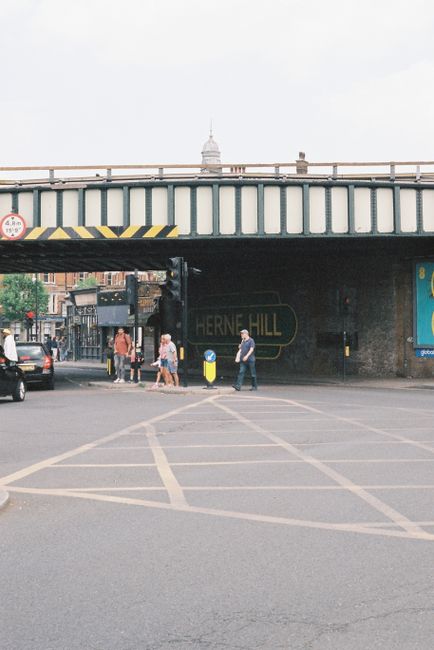
Commercial Waste Herne Hill

Commercial waste in Herne Hill needs a practical, organised service that keeps business premises clear, compliant and ready for daily use. We handle routine waste removal for offices, shops, hospitality premises and other commercial settings, with a focus on sensible sorting, responsible disposal and straightforward collection planning. The aim is to make business waste management easier without adding unnecessary disruption to the working day.
Our service can cover mixed non-hazardous waste, recyclable materials and bulky items that need careful handling, depending on what your site produces. For businesses comparing options, the most useful starting point is often the type of waste, how often it builds up and whether the load includes items that need separate treatment. If you are looking into costs and service scope, see our pricing and quotes page for a clear overview of how enquiries are assessed.
We also support businesses that need a more structured arrangement for repeat clearances rather than a one-off uplift. A well-planned collection helps keep storage areas usable, reduces clutter around staff workspaces and supports cleaner back-of-house operations. If you already know the kind of waste you need removed, you can request a quotation with the details that matter most, and we will take it from there.
Business waste removal tailored to commercial premises
Our business waste removal service is designed for commercial premises that need items taken away without turning the process into a major interruption. That may include packaging, general refuse, redundant office contents, light fixtures, broken furniture or other day-to-day waste streams that are no longer needed on site. We can help where a premises produces a steady build-up as well as when there is a larger clearance before a move, refurbishment or change of use.
Different workplaces generate different kinds of waste, so the service is best approached by separating what can be reused, recycled or removed for disposal. This is especially useful when there are mixed contents in storerooms, reception areas or back offices. If you need to know what happens to certain materials, our recycling and sustainability page gives further information about the approach we take to recovery and responsible processing.
Office clearance for desks, storage and fitted rooms

Office clearance usually involves more than simply removing a few unwanted pieces. Workspaces can contain desks, chairs, filing cabinets, shelving, IT peripherals, archive materials and general clutter that has accumulated over time. A practical clearance needs to account for access, lifting routes and the order in which items leave the room, particularly where businesses want to keep part of the office operational while the clearance takes place. For more detail on the service itself, see office clearance.
We can also support clearances where the main aim is to create a more functional layout for staff or to remove older fittings ahead of refurbishment. In those cases, it helps to decide what should stay, what should be segregated for recycling and what needs to be moved quickly so that the space can be used again. If confidential papers are part of the clearout, the separate confidential shredding page may be useful when planning how to handle sensitive material.
Useful preparation for a commercial clearance is usually simple: make a note of the main item types, identify anything with restricted access, and separate anything that must remain on site. That information makes it easier to plan the work sensibly and to avoid delays on the day. You do not need to overcomplicate it; a brief summary of the rooms involved and the broad contents is often enough to begin.
Furniture removal and disposal for workplaces
Many commercial clearances are driven by furniture that is no longer needed, no longer suitable or too cumbersome to leave in place. We handle furniture removal and disposal for business settings where items such as desks, task chairs, cabinets, shelving, tables and soft seating need to be taken away. Where suitable, pieces may be separated for reuse or material recovery rather than treated as general waste, depending on condition and type. Related information is available on our furniture clearance and furniture disposal pages.
Furniture from reception areas, meeting rooms and staff spaces can vary widely in size and finish, so the removal process benefits from a clear plan. Large items may need to be moved in a particular order, especially where lifts, narrow corridors or shared entrances are involved. This is also where the difference between a clearance and simple disposal matters: a clearance may include multiple furniture types from several rooms, whereas disposal can focus on one category or a smaller set of items.
Managing bulky items and specialist waste streams

Some commercial waste requires extra care because of size, weight or material type. Bulky items can include appliances, large pieces of furniture, damaged fixtures or outdated equipment that is awkward to move through a working premises. Where a site also produces specific waste streams, it is important to keep those separate from general refuse so that disposal is handled appropriately. Our service pages for fridge and appliance removal and mattress and sofa disposal describe two common categories that often arise during mixed clearances.
There are also situations where waste must not be treated casually because the material may need specialist handling or different routing. Examples can include certain workshop items, cleaning residues or other loads that are not suitable for ordinary disposal methods. For those cases, the correct approach is to identify the waste type early and check the relevant route before collection is arranged. The hazardous waste disposal page is a useful reference where controlled handling is needed.
When a business has several categories of waste on site, a sensible method is to sort them by type rather than letting one mixed pile grow. That often makes the eventual clearance easier to manage and can help keep reusable or recyclable material distinct from everything else. If you are comparing options for a larger commercial uplift, use the service description as a guide and decide which items belong in the main collection and which need separate treatment.
Clearances for garages, storage areas and redundant stock
Commercial premises often use garages, plant rooms, storage cupboards and back areas for overflow items that no longer belong in everyday circulation. Over time, these places can gather old stock, packaging, broken equipment, replacement parts and general waste. Our garage clearance service is relevant when that hidden storage needs to be emptied methodically, while the broader waste removal page covers the general collection of unwanted materials from business sites.
These jobs are often easiest when the contents are reviewed before removal begins. Some items may be earmarked for redistribution, some for recycling and some for disposal, and a neat separation helps keep the process efficient. Businesses with inventory movement or seasonal stock changes may also find it useful to pair the clearance with a review of what will remain on site. That way the cleared area is not filled again with items that no longer support day-to-day operations.
For sites that need a broader emptying of rooms or outbuildings, the approach is similar: identify the main item groups, decide what stays and remove the rest in a controlled sequence. This is especially important where access is limited, because the order of removal affects how smoothly the work can progress. A careful plan helps avoid unnecessary handling and keeps shared access points clearer for staff or tenants.
House, home and flat clearance for mixed commercial requirements

Although this page focuses on commercial waste, some businesses and landlords need services that overlap with domestic-style clearances, particularly when premises include living quarters, staff accommodation or mixed-use buildings. In those cases, the relevant clearance may be closer to a house, home or flat clearance than a standard office uplift. Our related pages for house clearance, home clearance and flat clearance explain those service types in more detail.
This matters because the layout, item mix and access arrangements in a residential-style property can be very different from a conventional workplace. A compact flat above a shop, for example, may require careful handling of corridors, stairwells and lift access, while a larger house used partly for business may include rooms with office contents, stored materials and ordinary household items together. Understanding the property type helps determine how the clearance should be organised.
Where a property contains several kinds of contents, it is often better to treat the job as a structured clearance rather than a simple single-item removal. That allows items to be grouped sensibly and reduces the risk of useful material being mixed with general waste. If you are unsure which service is the closest fit, the best starting point is to describe the property type and the main contents rather than trying to categorise every object in advance.
How commercial waste is sorted, lifted and routed
Commercial waste collections work best when the material is sorted before removal starts. General refuse, recyclable items, bulky furniture and specialist waste should not all be treated as the same thing. The collection method depends on what is being taken away and how it needs to be processed afterwards, which is why clear descriptions are more useful than vague labels such as “miscellaneous”. A thoughtful approach helps protect the condition of the premises and supports more responsible disposal.
On a working site, lifting and movement also matter. Items may need to be carried through shared halls, service corridors or loading areas, so the route should be considered alongside the waste itself. In some premises, it makes sense to remove items in stages so the work does not block staff movement or customer access for longer than necessary. If you are preparing a larger site clearance, these operational details are usually more important than trying to estimate the final total in advance.
The service pages linked throughout this site give a clearer picture of the different item types that can be handled. If you are planning a collection and need a quick way to decide what belongs together, think in three groups: items to keep, items to recycle and items to remove. That simple structure often makes the next step much easier.
About Herne Hill
Herne Hill is a district in south London situated across the London Boroughs of Lambeth and Southwark, centred around the junction where Railton Road, Half Moon Lane and Herne Hill meet. The area is known for its mixture of residential streets, local shops and transport connections, with Herne Hill station providing rail services and Brockwell Park forming one of its best-known open spaces. The park covers a substantial area and contains the Lido, a familiar landmark for residents and visitors, along with lawns, trees and paths that give the district a strong green edge. The area’s built environment reflects layers of development from the nineteenth and twentieth centuries, with terraces, villas and later infill contributing to a varied streetscape. Herne Hill also has a long association with local community life, independent businesses and neighbourhood events, while nearby Dulwich and Brixton place it within a wider part of south London that combines housing, parks and busy urban routes. The station area acts as a focal point for movement through the district, and the surrounding streets include a mix of cafés, local services and everyday amenities. Brockwell Park’s elevated ground and open views are especially characteristic, and the park’s historic setting helps define Herne Hill’s identity as a place where urban density and accessible green space sit close together.
Office moves, fit-outs and ongoing collection plans

Some businesses need more than an occasional clearance. Offices may be moving location, reconfiguring rooms or replacing old contents in stages, and that creates a need for a collection plan that can adapt to changing schedules. A well-managed clearance can support a fit-out by removing obsolete items before new furniture arrives, or it can clear the remaining waste after works are complete. Our builders waste clearance page is useful where refurbishment debris, offcuts or site waste also forms part of the job.
For premises that generate a steady volume of waste, repeating the same process each time can be easier than starting again from scratch. That may mean identifying the usual waste streams, noting where items are stored and deciding which categories should be removed together. In many cases, a short written summary is more practical than a long explanation. If you are ready to move forward, you can also use the contact us page to make an enquiry and request a quotation.
If you would like to keep the process straightforward, start with the main item types, the property type and any access details that affect removal. Then choose the service page that best matches the waste on site, and use the enquiry route that suits you best. Request a quotation when you are ready, and we will help shape the collection around the waste rather than the other way round.